The expensive problem in structural bolting is not the bolt price — it is a set that arrives out of tolerance, so the nut will not run up on site and the erection crew starts reaming holes.
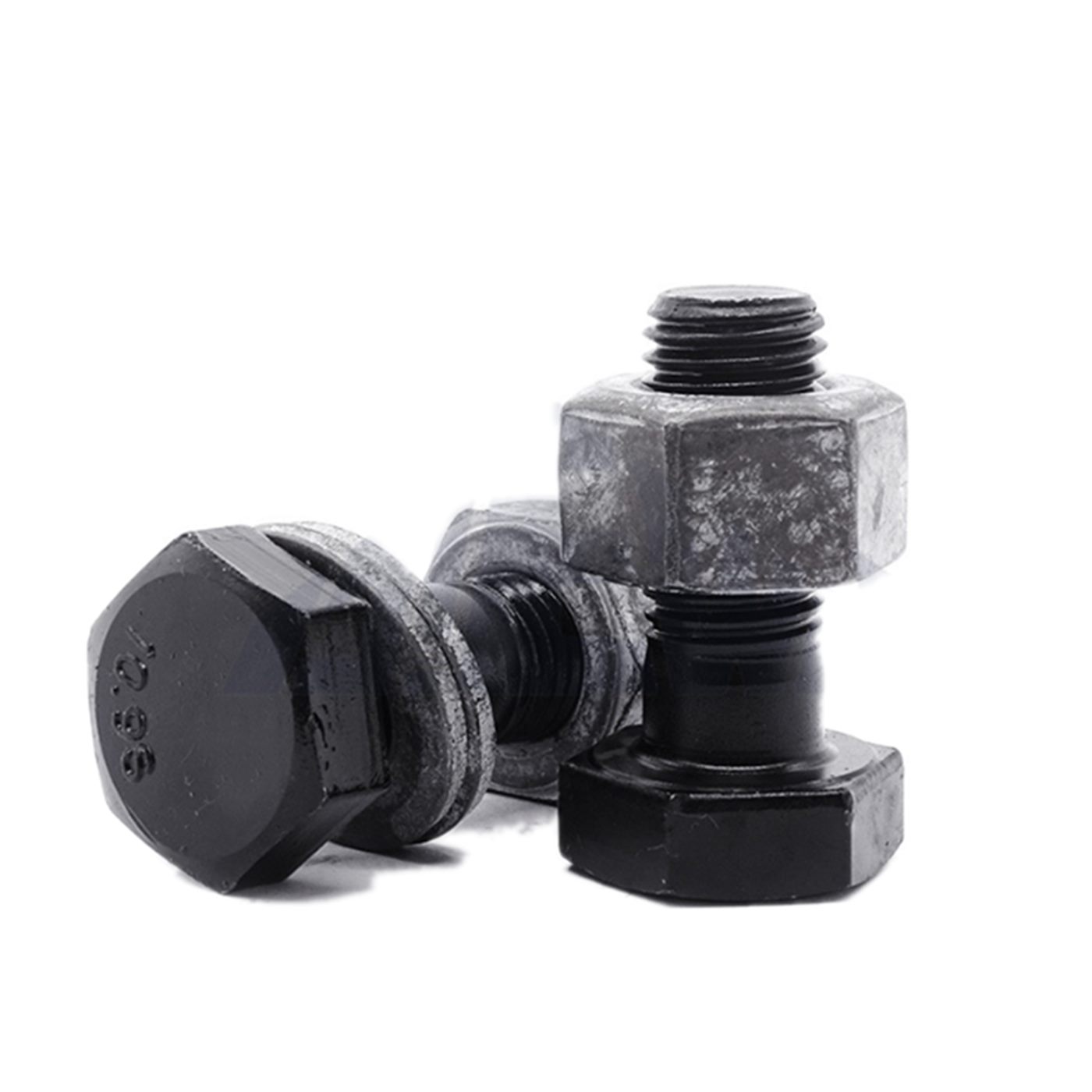
A portal frame is designed around a bolt set: bolt, nut and washer with a stated class and a stated thread allowance. If the three parts come from different lots, the nut may be tapped to a different allowance than the bolt thread, and the assembly either will not run up by hand or sits loose. We supply HR sets, heavy hex sets and tension-control bolts as a set from one heat and one coating batch, with the set marked together.
For shop and site connections the usual order is an M16–M24 HR set to DIN 6914 / 6915 / 6916 in class 10.9, plain or zinc flake, tightened by torque or part-turn method. Inch-series buildings take heavy hex hex bolts to ASTM A325 / A490 with the matching heavy nut and hardened washer. Where the erection programme is tight and the site wants a visual check instead of a torque record, we quote tension-control bolts with the splined end and the calibration batch written on the carton.
| Main sizes | M12 – M30, plus 1/2" – 1-1/2" |
|---|---|
| Metric standards | DIN 6914 bolt, DIN 6915 nut, DIN 6916 washer |
| Inch standards | ASTM A325 / A490, ASME B18.2.1 heavy hex |
| Property class | 8.8 and 10.9, inch grades 120 / 150 ksi min |
| Finish | Plain oiled, zinc flake, hot-dip galvanized |
Most steel contracts are covered by these six. The set is what gets priced, so a bolt without its nut and washer is not a useful quote.
M12–M30, class 10.9, large hex head with a chamfered washer face. The main preloaded bolt for primary frame connections in metric steelwork.
DIN 6915 nut, class 10, and DIN 6916 hardened washer, 300 HV. Matched to the bolt lot so the thread allowance and the bearing surface work together.
1/2"–1-1/2", 120 or 150 ksi minimum. Used on inch-series buildings and imported steel packages where the engineer works to ASTM.
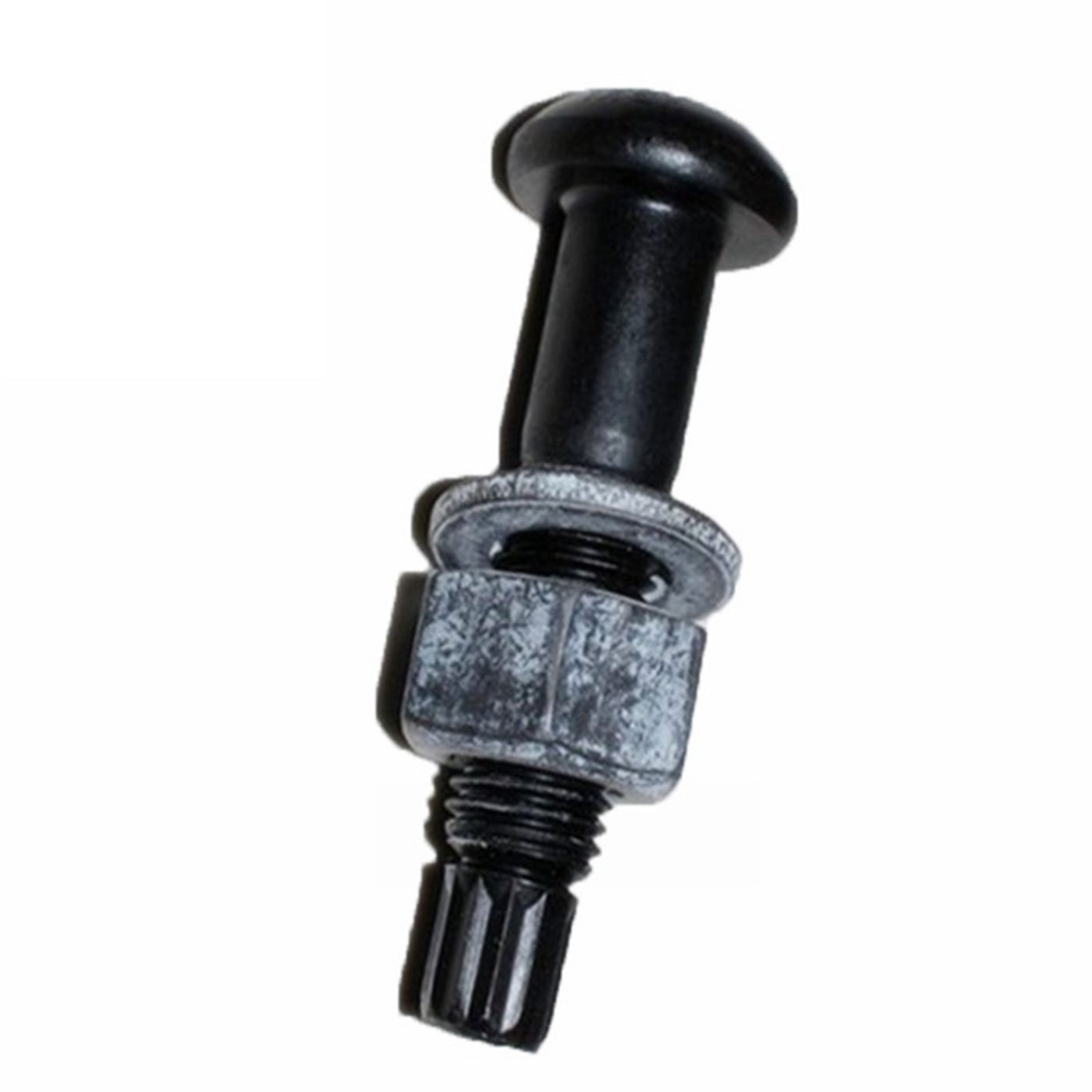
M16–M24, class 10.9, splined end with a tension-control washer. The wrench shears the spline at a set torque, so the crew can confirm a tightened bolt by looking at it.
M12–M24, class 8.8, with DIN 555 nut. Specified for purlins, bracing and cold-formed secondary members where a preloaded HR set is not required.
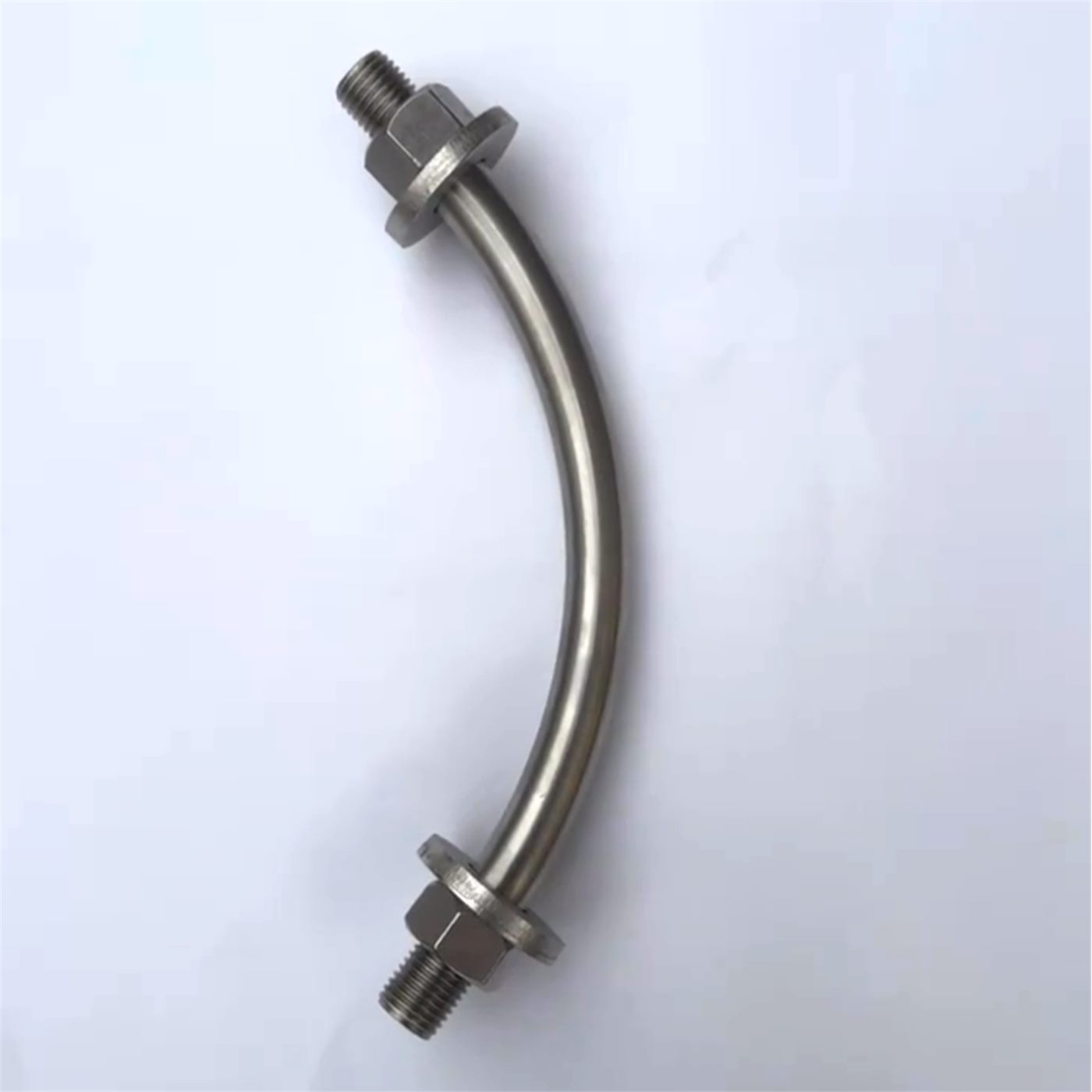
M16–M36 threaded rod, class 8.8, hot-dip galvanized, with plate and nut. Cast or grouted into the foundation to receive the column base plate.
The table covers metric HR sets, inch heavy hex and tension-control bolts. Anything outside it is quoted against the drawing, including special thread lengths.
| Size | Standard | Material & Class | Finish | Application |
|---|---|---|---|---|
| M12 × 40–60 | DIN 6914 set | 10.9 | Plain, zinc flake | Bracing and secondary steel |
| M16 × 45–70 | DIN 6914 / 6915 / 6916 | 10.9 | Plain oiled | Primary frame, preloaded joint |
| M20 × 50–90 | DIN 6914 set | 10.9 | Plain, zinc flake | Column to beam connection |
| M24 × 60–110 | DIN 6914 set | 10.9 | Plain oiled | Heavy column splices |
| M30 × 70–150 | DIN 6914, hot forged | 10.9 | Plain | Transfer beams, plant structures |
| 1/2" – 1-1/4" | ASTM A325 / F3125 Type 1 | 120 ksi min | HDG, plain | Inch-series steel buildings |
| 1/2" – 1-1/2" | ASTM A490 / F3125 | 150 ksi min | Plain | High-strength connections, no HDG |
| M16 – M24 | Tension-control bolt | 10.9 | Zinc flake, plain | Fast erection, visual tightening check |
| M12 – M24 | DIN 7990 + DIN 555 nut | 8.8 | Hot-dip galvanized | Purlins, bracing, secondary members |
| M16 – M24 | ASME B18.2.1 heavy hex | A325 / A490 | HDG, plain | Inch heavy hex series |
| M16 – M36 | DIN 976-1 holding-down stud | 8.8 | Hot-dip galvanized | Column base to foundation |
| M16 – M30 | DIN 6915 nut + 6916 washer | Class 10 | HDG, plain | Matched with HR bolt set |
Structural bolting failures are usually tolerance or process failures, not material failures. These are the five we plan around.
On a structural order the buyer usually has to hand a file to the engineer. The file is built from lot records, not from a general statement about the plant.
Yes, and that is how we prefer to quote a structural order. The nut and washer are selected against the bolt class and packed in the same carton under one lot number. Thread allowance on galvanized sets is checked by running the nut up the bolt by hand before packing, and the set is quoted with quantities that match your bolt schedule.
It is possible, but it is rarely the right choice for a structural joint. Galvanizing involves an acid pickle and a molten zinc bath, and the combination of high strength and that process carries an embrittlement risk. For 10.9 we normally recommend zinc flake or plain oiled, and we will say so on the offer instead of accepting the order quietly. The decision rests with your engineer, and we will produce whichever the drawing names.
Each lot ships with a packing list that carries the size, class, lot number and quantity, plus test records for hardness and tensile results taken from that lot. Material certificates to EN 10204 3.1 can be issued where the order calls for them. Third-party inspection by SGS, BV, TÜV or Intertek can be arranged, and the corresponding reports go with the same lot reference. See quality control for the check points.
Send the bolt schedule with sizes, class, standard and quantity, and say whether the joint is bearing or preloaded. We will reply per set, with the coating and the documentation stated on the offer.