The usual failure on a PV site is not a broken bolt — it is a mixed bag of stainless and zinc-plated parts that corrode against the aluminium rail before the array is five years old.
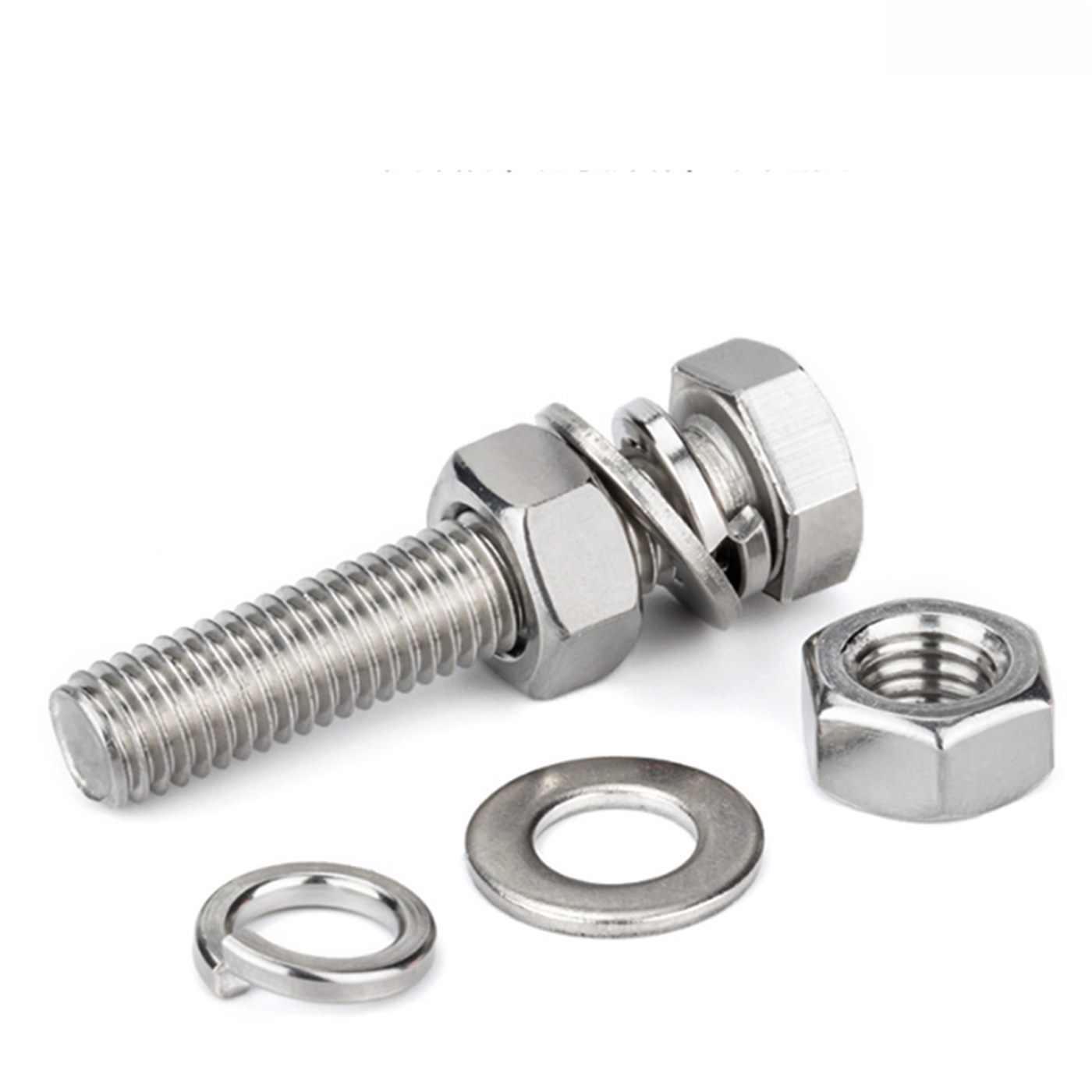
A mounting system is a stack of dissimilar metals: anodised aluminium rail, galvanised purlin, stainless clamp, carbon steel foundation bolt. Every joint is a small galvanic cell, and the fastener is the part that gives way first. We quote the mounting kit as a set, so the bolt, washer and nut in one joint are chosen together rather than sourced from three suppliers.
For rail and clamp fixing the default is an M8 or M10 hex bolt in A2-70 with a serrated flange nut, assembled dry. Where the site is coastal or the module sits over a chloride-rich roof, we move the whole joint to A4-80 and add an isolating washer so the stainless never touches bare aluminium. Foundation and base-plate connections stay hot-dip galvanised, with washers sized to the slotted hole so the clamp load lands on the rail and not on the bolt head. Sizes we do not list are quoted to your drawing through the custom parts route.
| Main sizes | M6 – M16, plus M8/M10 hammer-head and T-bolts |
|---|---|
| Stainless grades | A2-70 (304), A4-80 (316) |
| Carbon steel | Class 8.8, hot-dip galvanized 50–80 µm |
| Nuts | Serrated flange DIN 6923, nylon insert DIN 985 |
| Washers | DIN 125 / ISO 7089 flat, DIN 127 spring, isolating washers |
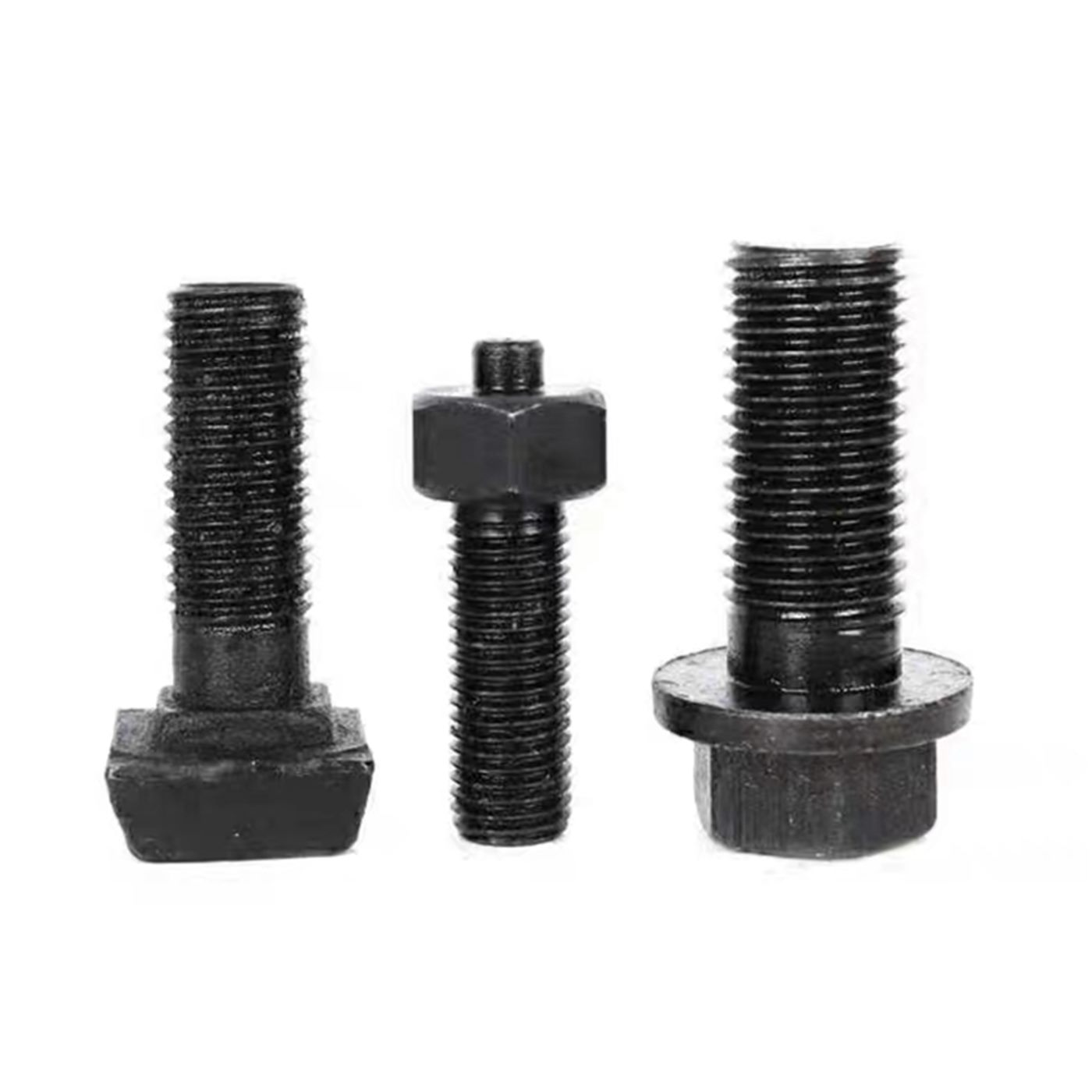
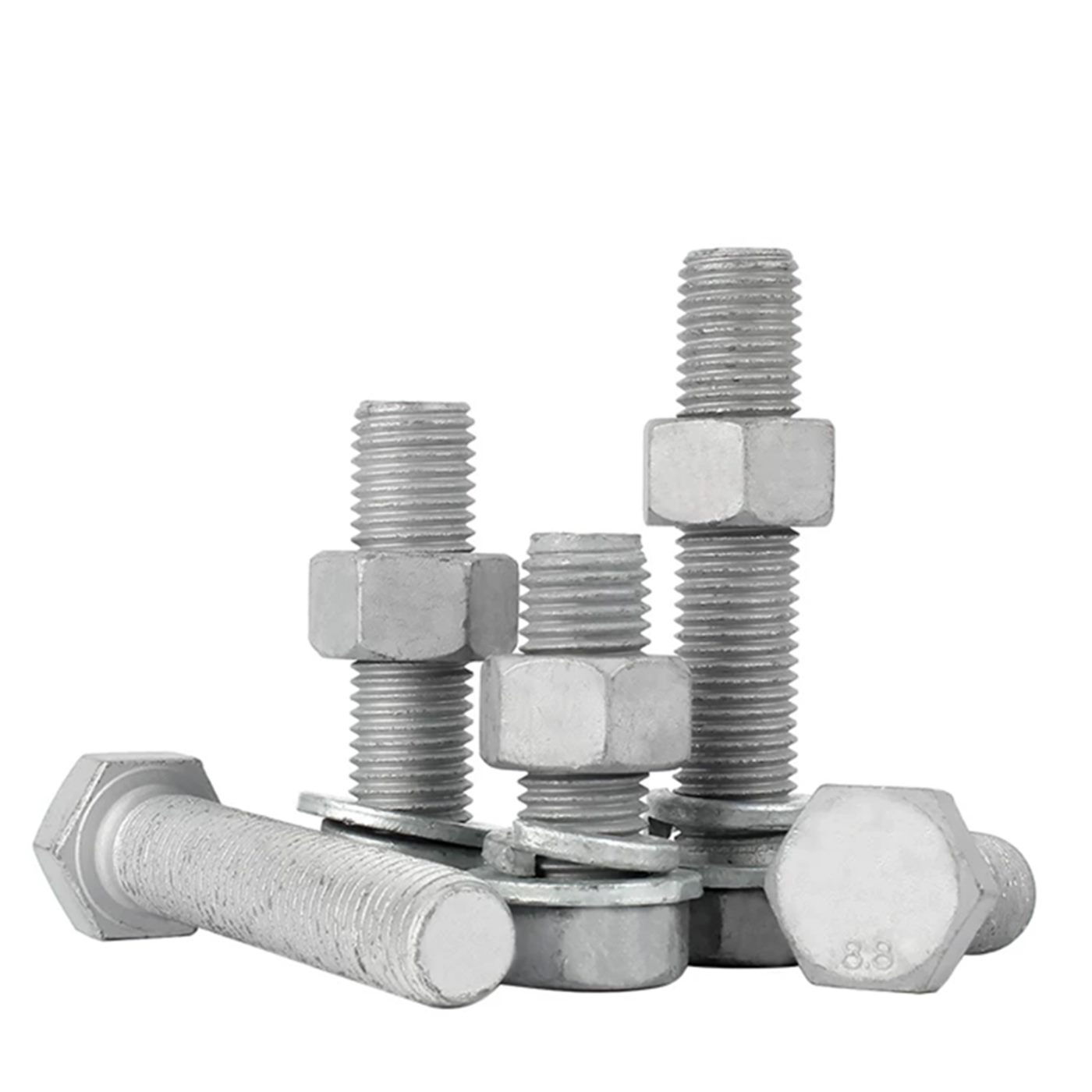
A PV structure is normally bought in these six items. Ordering them as one lot keeps the thread fit and the coating consistent from the first table to the last.
M8 × 25–60 and M10 × 30–80 in A2-70, DIN 931 / 933. Carries the clamp load between the rail and the purlin; class 8.8 HDG is used when the substructure is galvanised steel.
M8 / M10, DIN 6923, A2-70. The serrations bite into the rail slot and hold the clamp without a separate lock washer, which shortens roof assembly time.
M8 × 20–40, A2-70 or 8.8 zinc flake. Drops into the channel of the mounting rail and tightens from one side, so the installer never works underneath the module.
DIN 125 and DIN 127, A2 / A4. The flat washer spreads load across the aluminium slot; the spring washer takes up the small settlings that appear after thermal cycling.
M12 × 150–300 and M16 × 200–400, J or L type, 8.8 HDG. Fixes the post to the concrete pad; the galvanised shank is cast in, so the exposed thread stays coated.
M10, DIN 976-1, A2-70, cut to length. Used for cross bracing and cable-tray support where a fixed-length bolt is shorter than the span.
The sizes below are produced and packed regularly. Anything outside the table is quoted against your drawing and your mounting system supplier's manual.
| Size | Standard | Material & Class | Finish | Application |
|---|---|---|---|---|
| M6 × 20–50 | ISO 4017 / DIN 933 | A2-70 | Plain, passivated | Module clamp to rail |
| M8 × 25–60 | DIN 931 / ISO 4014 | A2-70, A4-80 | Plain, passivated | Rail to purlin, mid clamp |
| M8 × 20–40 | Hammer-head / T-bolt | A2-70, 8.8 | Plain, zinc flake | Channel slot, one-side assembly |
| M10 × 30–80 | DIN 933 / ISO 4017 | A2-70, A4-80 | Plain, passivated | Purlin to beam, high wind zone |
| M10 × 30–60 | DIN 6923 flange nut | A2-70, A4-80 | Plain | Serrated nut for module clamps |
| M12 × 40–100 | DIN 931 / ISO 4014 | 8.8 | HDG 50–80 µm | Support post to base plate |
| M12 × 150–300 | Anchor bolt, J / L type | 8.8, 4.8 | Hot-dip galvanized | Column base cast into concrete |
| M16 × 200–400 | Anchor bolt, L type | 8.8 | Hot-dip galvanized | Tracker and fixed-tilt foundation |
| M8 / M10 | DIN 125 / ISO 7089 | A2, A4 | Plain | Load spread in aluminium slot |
| M8 / M10 | DIN 127 spring washer | A2 | Plain | Vibration take-up on clamp bolts |
| M10 × 1000–3000 | DIN 976-1 threaded rod | A2-70 | Plain | Cross bracing and cable tray |
| M8 – M12 | Custom clamp set | A2-70, 6005-T5 aluminium | Plain, anodized | Rail splice, roof hook, clamp body |
These are the problems that come back from site, and the process change that answers each one.
For a solar order the checks that matter are grade, coating thickness and thread fit — because the parts are assembled dry, on a roof, by hand.
A4 (316) is the safer default within about a kilometre of the sea, and it is what we quote for roof-top arrays in salt-spray zones. A2 (304) is adequate inland and away from chlorides, and it is cheaper. If the design mixes stainless bolts with galvanised purlins, keep the stainless-to-aluminium contact isolated with a washer rather than relying on the coating alone.
Yes. Send the bill of materials per table or per array block and we pack a complete set into one bag, marked with the block number. This is the usual arrangement for roof-top jobs where the installer works from a drawing, and it removes the sorting step on site. The set is taken from one lot so the thread fit is consistent.
The torque belongs to the mounting system supplier, not to us, because it depends on the rail section and the clamp. What we control is that the bolt and nut can take that torque without galling or stripping. If you send the target torque and the bolt size, we will confirm the grade and lubricant that suit it, and supply the matching nuts for the same joint.
Send the bill of materials per array, the grade you need and the project location. We will reply with unit price, MOQ and a delivery date, and state the coating thickness and grade on the offer.