The failure that stops a machine line is often a socket head screw whose hex recess rounds off at the first tightening, because the head was made softer than the class on the label.
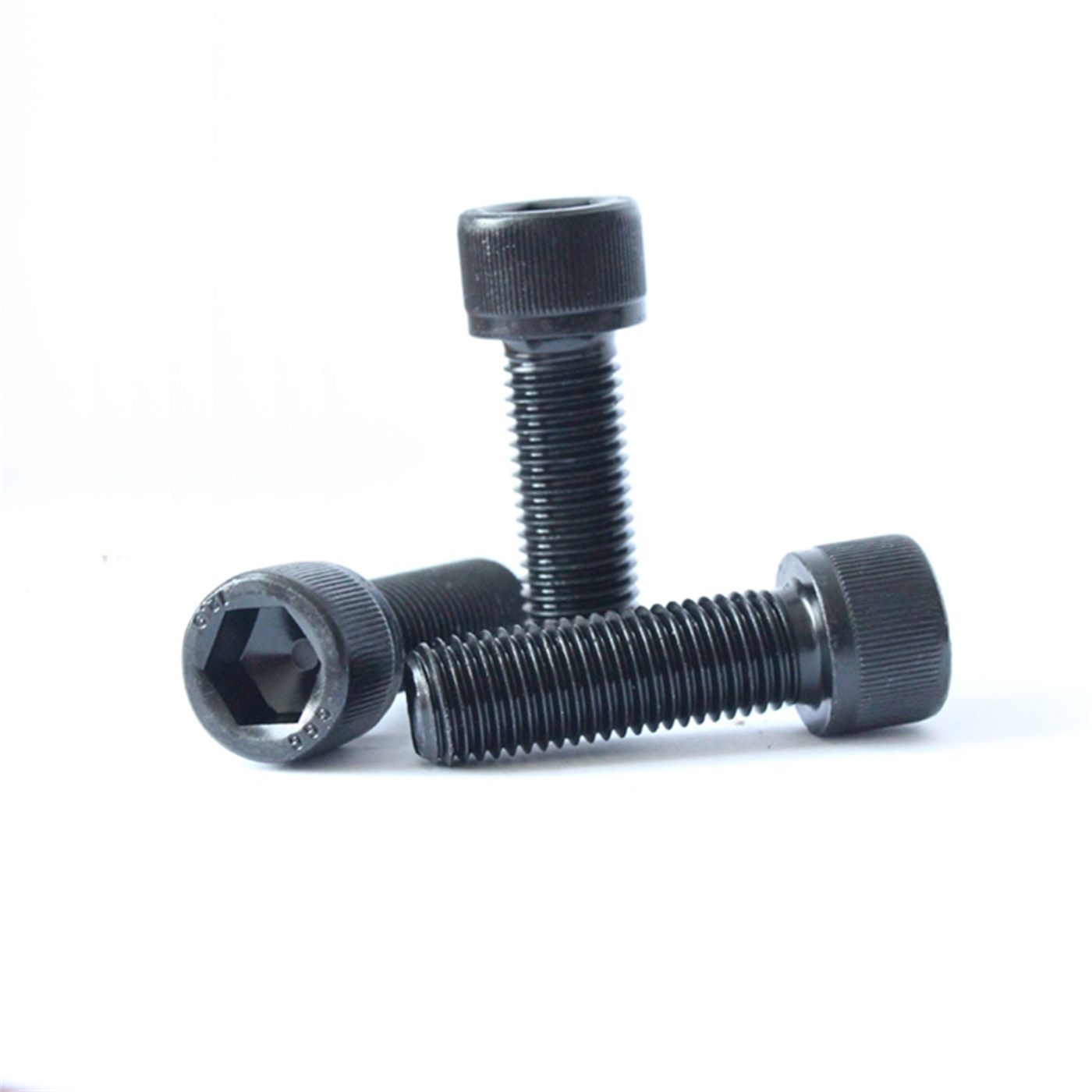
A machine builder buys to a bill of materials where every screw carries a standard, a class and often a surface treatment. When a substitute arrives, it usually shows up later as a stripped socket, a seized stud in an aluminium casting, or a screw that loosens after a month of running. We quote the line item as written and say so when a request cannot be met.
Most of the volume is socket head cap screws to DIN 912 in class 12.9, black oxide, with class 10.9 and A2-70 for the positions that sit outdoors or against stainless. Flange and manifold joints take double-end studs from the threaded rod range, cut to length and chamfered at both ends. Where a standard part will not fit — a shoulder, a spacer, an odd head — the drawing goes to our custom parts route and comes back as a turned or headed part with the dimensions checked against the print.
| Main sizes | M3 – M24, plus inch sizes on request |
|---|---|
| Socket products | DIN 912, 7991, 7984, set screws DIN 913–916 |
| Studs and rods | DIN 938 / 939 double-end, DIN 976-1 threaded rod |
| Property class | 8.8, 10.9, 12.9, 45H set screws, A2-70 |
| Finish | Black oxide, zinc plated, zinc flake, plain |
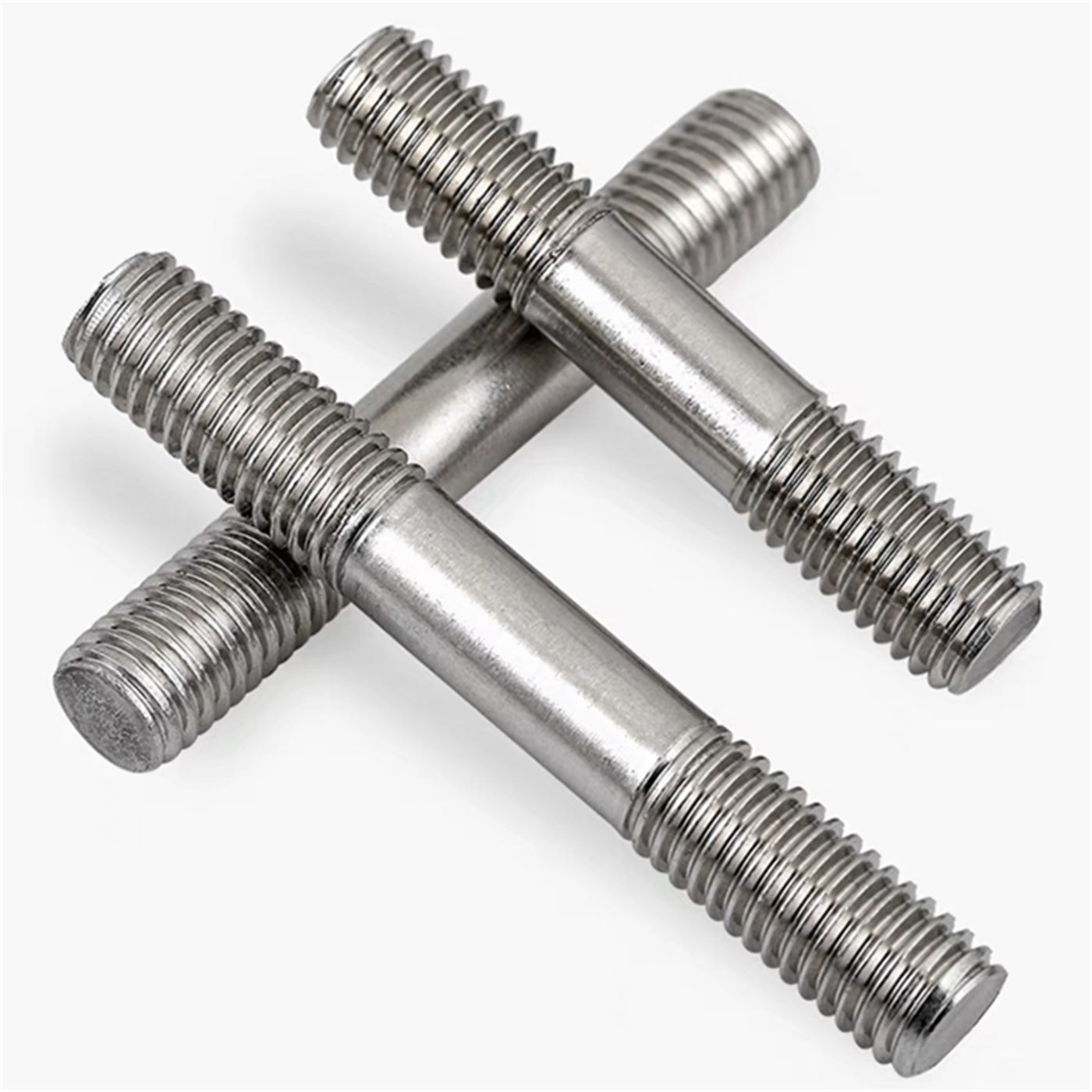
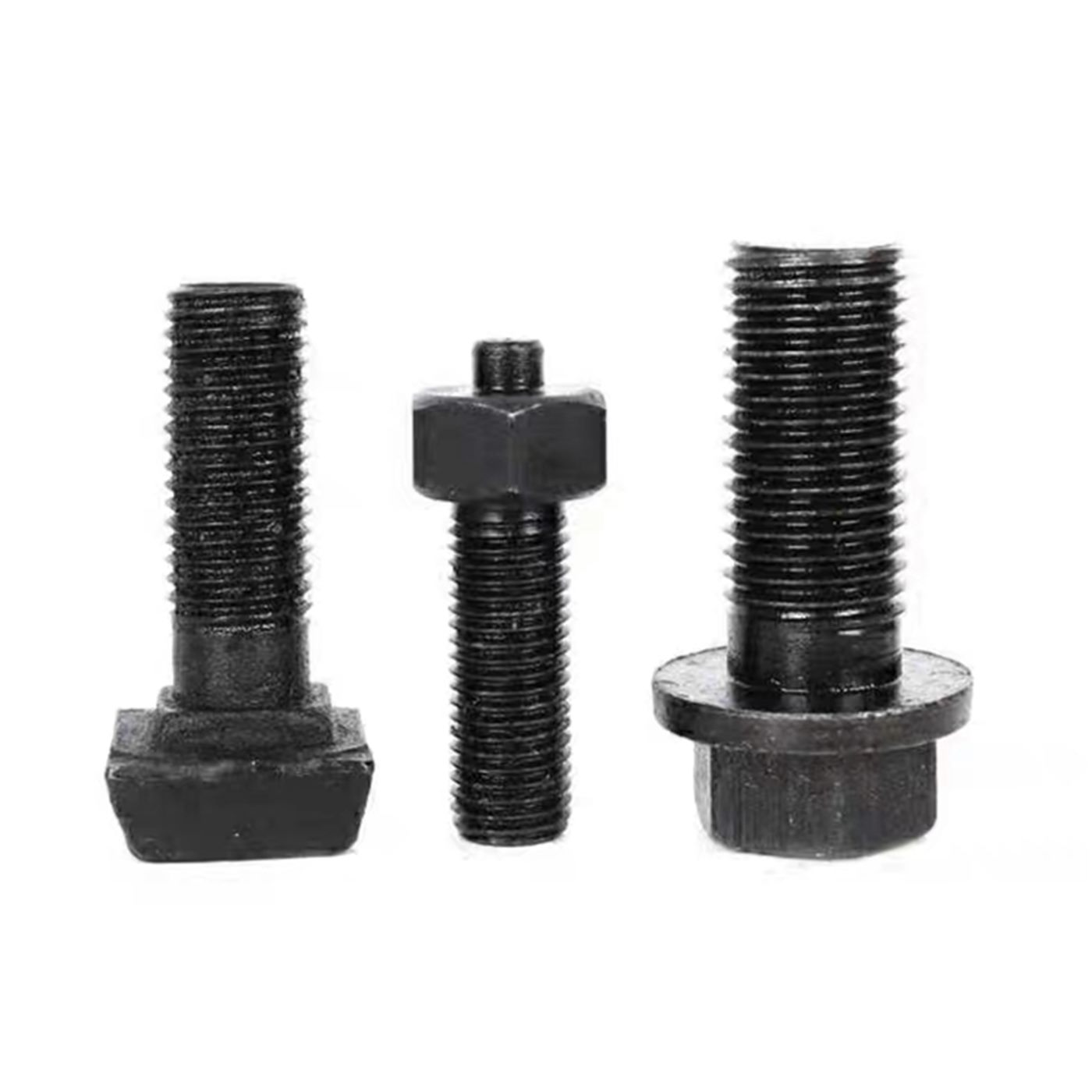
These are the lines that repeat across machine builds. Each is quoted against the standard and class on your drawing.
DIN 912 / ISO 4762, M3–M20, class 12.9, black oxide. The default for machine frames, guards and gearbox covers where a hex key has better access than a wrench.
DIN 7991, M4–M16, class 10.9 or A2-70. Used where the head must sit flush with a guide rail or a moving plate and cannot stand proud of the surface.
DIN 913 / 914 / 915, M4–M16, class 45H. Holds a collar, pulley or bearing against a shaft by point contact; the hardness is what stops the point from flattening.
DIN 938 / 939, M8–M24, class 8.8 or B7. One end into the casting, the other through the flange, so the joint can be opened without disturbing the thread in the housing.
DIN 985, M6–M20, class 8 or A2. Used on linkages, guards and fan mounts where vibration would walk a plain nut loose over a shift.
M8–M24 body sizes, 303 / 316 stainless or 4140. Shoulder screws, spacers and adaptors turned to drawing, with the critical diameters inspected against the print.
The table is the common ground. Lengths, thread lengths, head styles and materials outside it are quoted against the drawing.
| Size | Standard | Material & Class | Finish | Application |
|---|---|---|---|---|
| M3 × 8–25 | DIN 912 / ISO 4762 | Alloy steel 12.9 | Black oxide | Guards, covers, small assemblies |
| M4 – M8 | DIN 912 | 12.9 | Black oxide, zinc flake | Die plates, fixtures, jigs |
| M10 × 30–80 | DIN 912 / ISO 4762 | 12.9, A2-70 | Black oxide, plain | Gearbox and pump housings |
| M12 – M20 | DIN 912 | 12.9 | Black oxide | Press frames, machine bases |
| M6 – M16 | DIN 7991 countersunk | 10.9, A2-70 | Black oxide, plain | Flush surfaces, guide rails |
| M5 – M12 | DIN 7984 low head | 8.8, 10.9 | Black oxide | Limited clearance positions |
| M8 – M24 | DIN 938 / 939 stud | 8.8, B7 | Plain, zinc plated | Flange joints, valve bonnets |
| M8 – M30 | DIN 976-1 threaded rod | 8.8, B7, A2-70 | Plain, zinc, HDG | Tie rods, adjustment, clamping |
| M6 – M20 | DIN 985 nylon insert nut | Class 8, A2 | Zinc plated, plain | Vibration on rotating equipment |
| M4 – M16 | Set screw DIN 913 / 914 / 915 | 45H | Black oxide | Collars, shaft positioning |
| M8 – M20 | Custom CNC turned part | 303 / 316, 4140 | Per drawing | Shoulders, spacers, adaptors |
Machine fasteners fail for reasons that are visible at assembly or shortly after. Each one has a process answer.
For machinery parts the buyer usually cares about three things: the class holds, the thread fits, and the part matches the drawing.
Yes. Send the drawing with tolerances, material and surface treatment, and state which dimensions are critical. We will confirm whether the part is a turned, headed or forged item, quote the tooling if there is any, and produce a first-article sample for approval before the run. Parts with a shoulder, a special head or an unusual thread length are routine for us.
Only with care. Electroplated zinc on class 12.9 carries a hydrogen embrittlement risk, and the plating process has to include a controlled bake. Many of our machine customers run 12.9 in black oxide for dry internal positions, or zinc flake where corrosion protection is needed. Tell us the environment and the load, and we will recommend the finish that matches it rather than the cheapest one.
Yes. Double-end studs to DIN 938 / 939 and threaded rod to DIN 976-1 are cut and chamfered to your length, with the thread length on each end made to the drawing. Studs for flange joints are normally supplied with the nut and washer in the same bag, and the assembly thread is checked by running the nut up by hand before packing.
Send the bill of materials or the drawing set with material, class and finish. We will reply per item with unit price, MOQ and a delivery date, and confirm the thread and finish in writing.